
Compliances in Kenya
Role of Documents
11/14/20251 min read
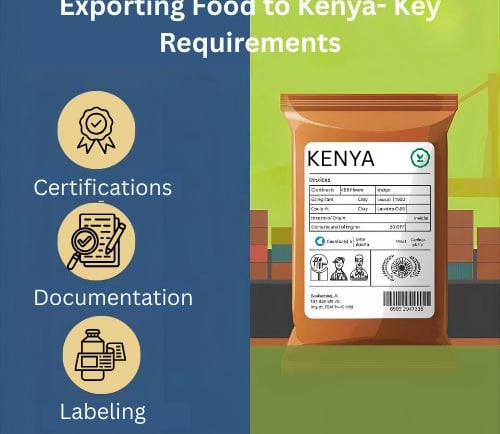
Exporting Food Products from India to Kenya –Compliance Requirements
In agro and food exports, product quality and pricing are key factors but in my experience, meeting the regulatory, documentation, and labeling requirements of the destination market is equally crucial. Most exporters use English in the labeling of food products since it is widely accepted, but many importers also prefer having Kiswahili alongside to comply fully and appeal to consumers.
So, when planning a shipment of food products to Kenya, here are the essentials; (product specific requirements may differ)
✅ Certifications Required:
FSSAI License (India): Proof of food safety at source.
APEDA Registration (RCMC): For processed food exports.
Certificate of Conformity (CoC): Mandatory by the Kenya Bureau of Standards (KEBS) before shipment.
ISO 22000 / HACCP certification: Often preferred by importers to ensure manufacturing standards.
📑 Documentation Needed:
Commercial Invoice & Packing List
Bill of Lading / Airway Bill
Certificate of Origin (for tariff benefits under trade agreements)
Certificate of Analysis (batch-specific lab test results)
Shipping Bill (India Customs clearance)
🏷️ Labeling Requirements in Kenya:
Product name (e.g., Tomato Puree)
Net weight in metric units
Country of origin (Product of India)
Ingredients list
Manufacture & Expiry date (DD/MM/YYYY)
Batch / Lot number
Importer’s details in Kenya
At the port of entry, consignments undergo Port Health inspection and may be tested again by KEBS to ensure conformity. Missing even a single requirement can lead to costly delays or rejection.
As global trade professionals, it’s clear: For markets like Kenya, getting the documentation and compliance right isn’t optional — it’s the difference between a smooth clearance and a stuck container at Mombasa.
Contact
contact@inicioimpex.com
+91 8928441548
© 2024. All rights reserved.