Supply Chain Resilience and Sustainability
The Real Connect Between The Two
Prerna Dharap
11/14/20252 min read
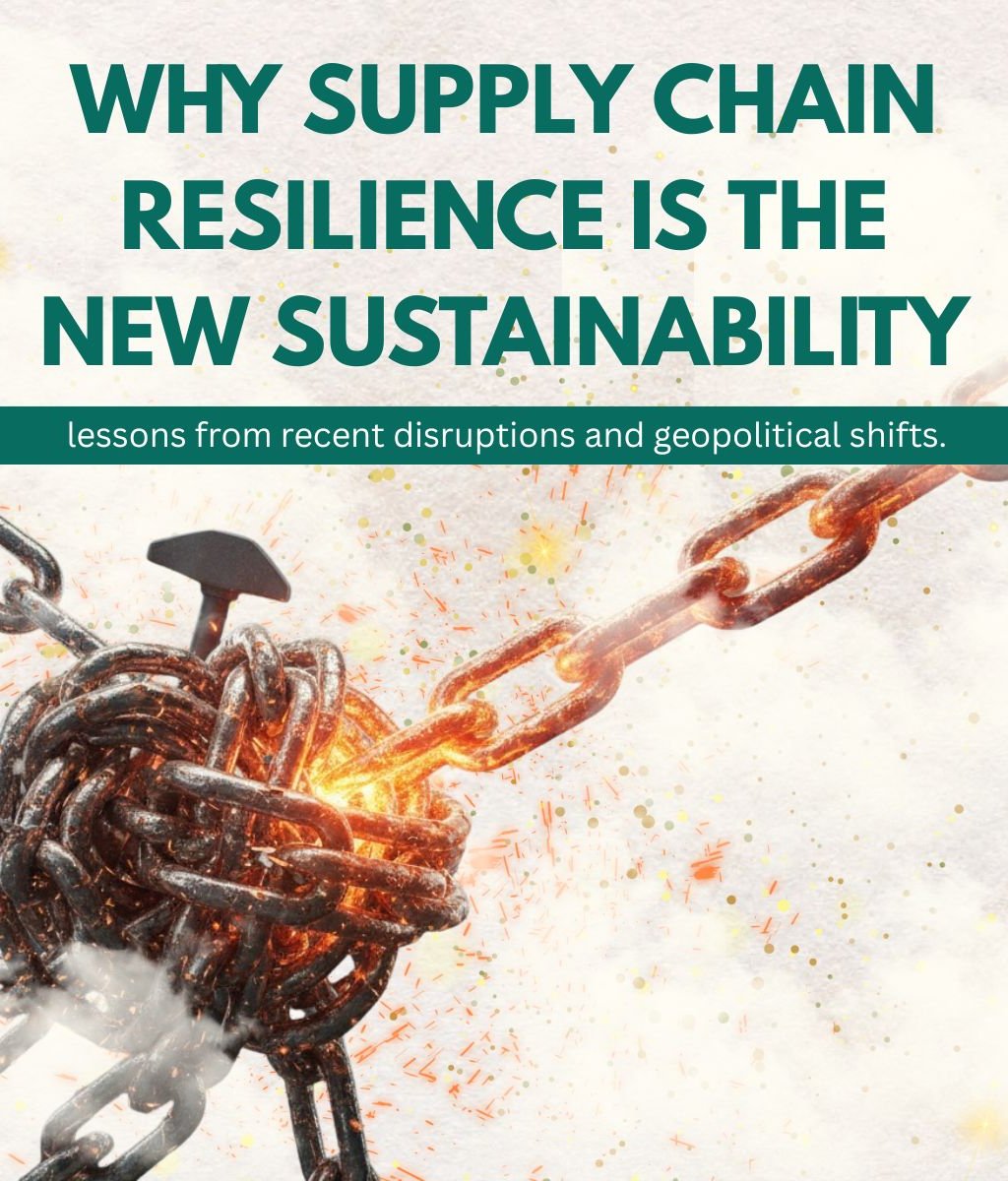
Why Supply Chain Resilience Is the New Sustainability. Lessons from Recent Disruptions and Geopolitical Shifts.
For years, sustainability was the ultimate badge of responsible business. It was synonymous with environmental care, ethical sourcing, and long-term value. But in today’s volatile world, one truth is becoming clear: a supply chain that can’t endure, can’t sustain.
From pandemics to port blockages, from trade wars to raw material shortages; the global economy has learned a hard lesson- resilience is no longer optional; it’s existential.
How fragile are we? The past few years have been a masterclass in vulnerability. Global shipping routes froze under lockdowns, energy markets convulsed under geopolitical tension, manufacturers faced component shortages that halted entire industries. These disruptions didn’t just expose supply chain weaknesses — they redefined the meaning of sustainability. Because no amount of green certification matters if your production collapses under pressure. Resilience is the foundation on which sustainability must now stand.
The need to move from linear chains to Adaptive Networks. Traditional supply chains were linear: one link breaks, and the entire system falters. Modern resilient supply chains are adaptive ecosystems. They are decentralized, diversified, and digitally connected.
Everyone has understood the +1 concept of sourcing. Multi-sourcing strategies reduce dependency on a single region.
Cloud-based systems enable real-time rerouting and agile decision-making. AI-powered demand forecasting helps anticipate disruptions before they occur.
The goal isn’t just survival, it’s continuity through intelligence. Companies that adapt faster now hold the competitive edge once reserved for low-cost producers.
Shift from Globalization to Risk Management has become imperative. We’re entering an era of “geo-economic tradecraft.” Supply chains are no longer just economic mechanisms, they’re strategic assets influenced by national security, trade policy, and political alliances.Businesses must now design supply chains that can withstand political storms — balancing efficiency with autonomy, and globalization with regional resilience.
Sustainability has now gone beyond green to stable. Sustainability used to mean minimizing environmental harm. Now, it also means ensuring operational endurance. Resilience isn’t about resisting change — it’s about absorbing it and emerging stronger.
The next generation of sustainable businesses will be defined not just by their environmental footprint, but by their ability to adapt, pivot, and persist in a world of constant flux.
In the trade ecosystem of tomorrow, resilience will be the ultimate competitive advantage — and the true measure of sustainability.
Contact
contact@inicioimpex.com
+91 8928441548
© 2024. All rights reserved.